-
1How to Worship at a Shinto Shrine and the Process
- 1.1Etiquette and How to Pass Through the Torii Gate and Shrine Gate
- 1.2How to Walk the Approach Path
-
1.3Hand-washing Etiquette (When a Ladle is Provided)
- 1.3.1Hold the ladle in your right hand, scoop up a generous amount of water, and wash your left hand.
- 1.3.2Switch the ladle to your left hand and wash your right hand.
- 1.3.3Switch the ladle back to your right hand, fill your left hand with water, and wash your mouth.
- 1.3.4Wash your left hand again.
- 1.3.5Wash the ladle handle with the remaining water.
- 1.4Hand-washing Ritual (Using Running Water)
- 1.5Proper Conduct Before the Offering Box and the Meaning of Making an Offering
- 1.6How to Ring the Bell and Its Meaning
- 1.7The Two Bows, Two Claps, One Bow Etiquette
- 1.8Exit Etiquette After Worship
- 2The Meaning of Shinto Shrine Visits and Japanese Culture
- 3Standard Attire for Visiting Shinto Shrines
- 4Shinto Shrine Etiquette and Visiting Hours
- 5Characteristics of Visiting Famous Shinto Shrines
-
6How to Explain Shrine Visiting Etiquette in English
- 6.1Basic English Expressions Often Used for Shrine Visits
-
6.2Specific Methods for Visiting a Shrine and English Expressions
- 6.2.1The center of the torii gate is the path for the kami, so it is proper etiquette to walk on the sides.
- 6.2.2The ritual of hand-washing involves purifying both hands and the mouth
- 6.2.3It is customary to quietly place offerings into the donation box and ring the bell two or three times.
- 6.2.4The formal worship etiquette is two bows, two claps, and one bow.
- 6.2.5After worship, it is proper etiquette to bow once toward the shrine building before leaving.
- 6.3Points to note when explaining shrine worship to foreigners
How to Worship at a Shinto Shrine and the Process
Etiquette and How to Pass Through the Torii Gate and Shrine Gate
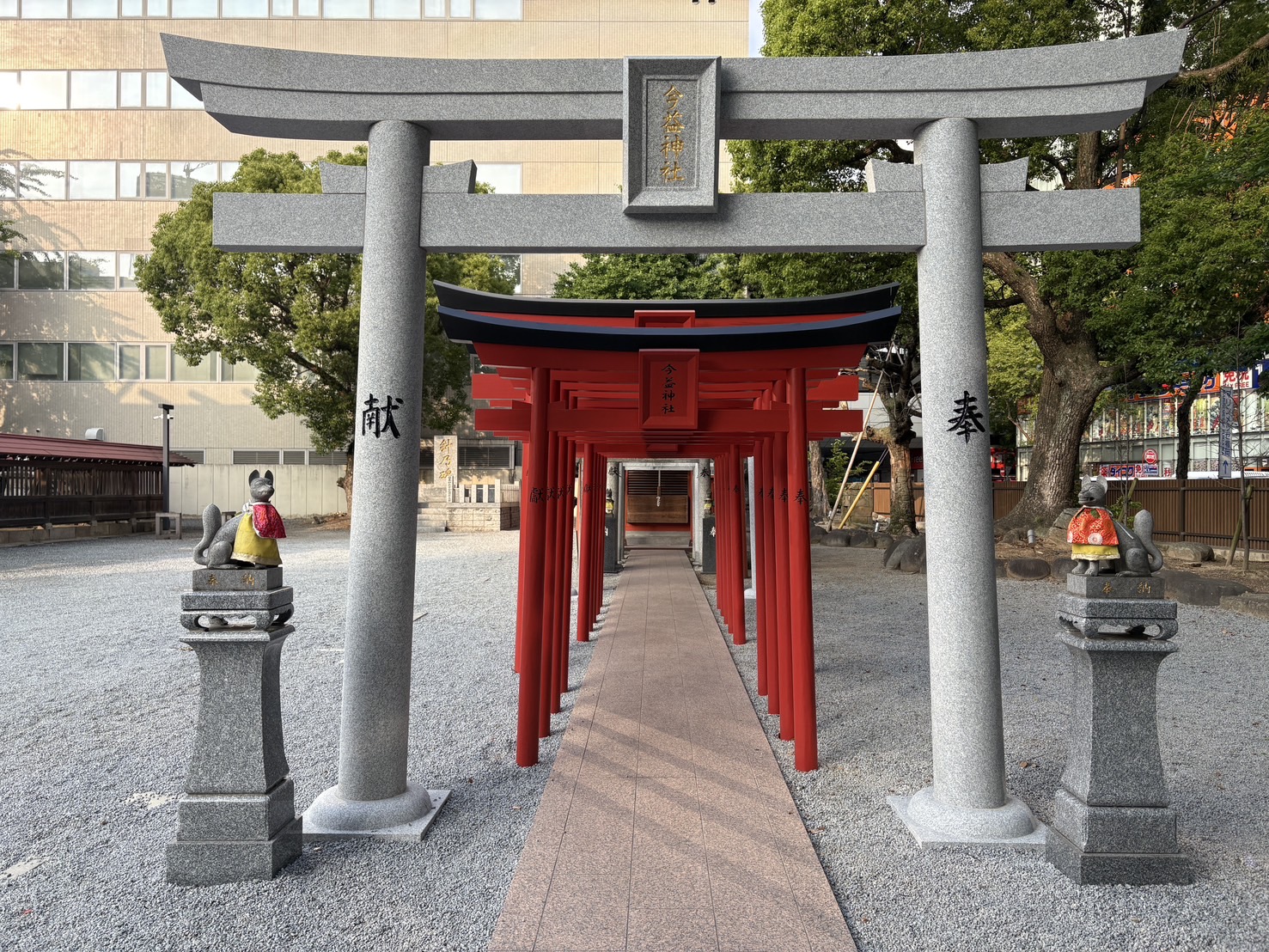
Standing While Avoiding the Center of the Torii Gate and Shinmon Gate
When entering a shrine, many shrines have a “torii gate” erected, and a “shrine gate” is often placed in front of the main hall (※Note: Some shrines do not have a shrine gate).
When passing through the torii or shinmon, avoid the “seichu” (center). The “seichu” is the center of the approach path, considered the path for the deity and the place directly facing the deity. Therefore, it is polite to refrain from standing or walking in the center.
Bow once lightly before the torii and shinmon gates
Passing through the torii gate or shinmon gate means you are entering the sacred space where the deity resides.
Therefore, before passing through, bow slightly once to show respect to the deity before proceeding.
The boundary between the sacred space (inside) and the secular world (outside)
Torii gates and shrine gates serve as a “boundary” separating the sacred space (inside) where the deity resides from the secular world (outside) where we live.
Therefore, when passing through a torii gate or shrine gate, be mindful that you are entering the space where the deity resides and proceed with respect.
How to Walk the Approach Path
Avoid walking directly down the center line of the approach path
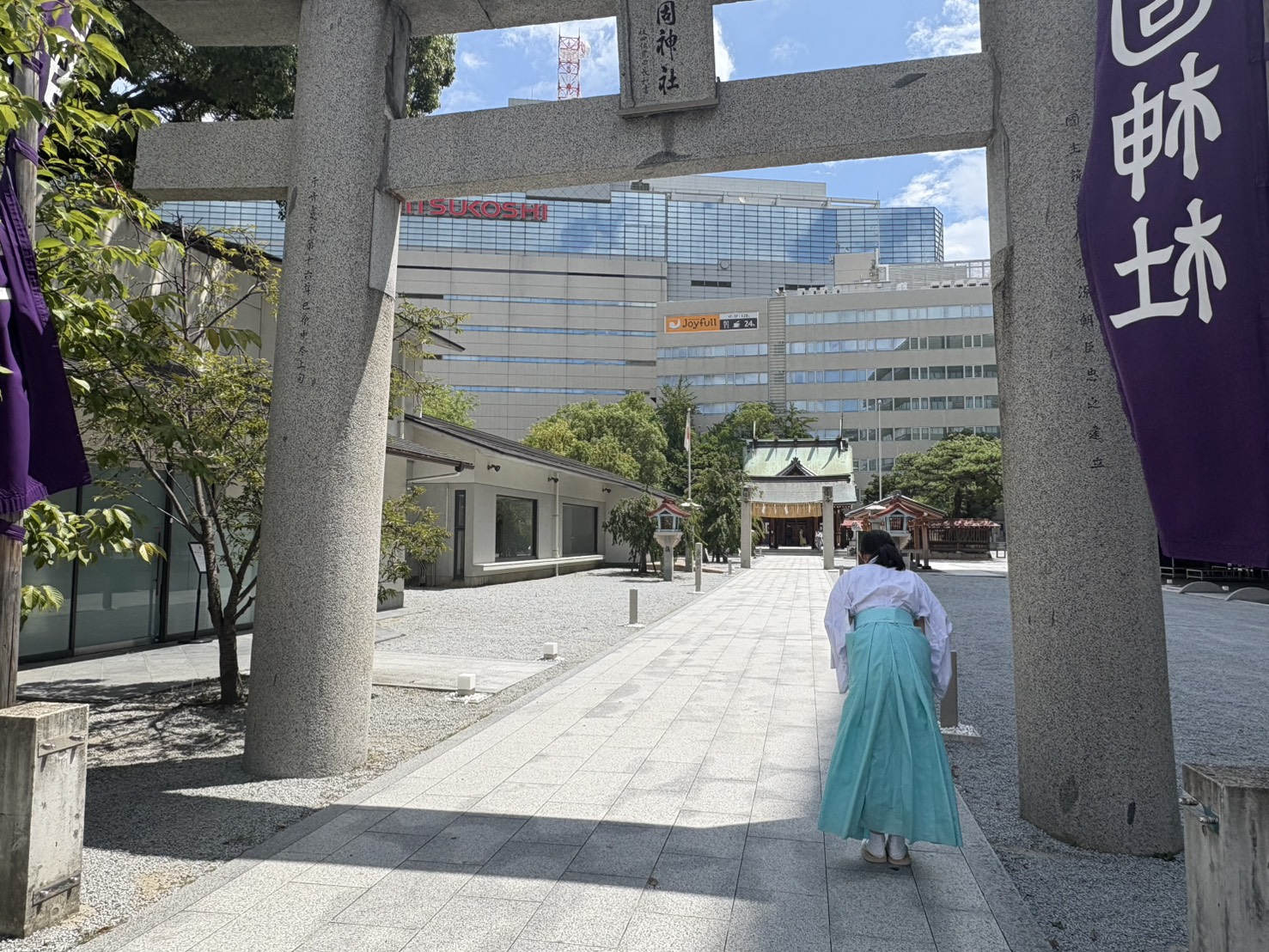
The central part of the approach path is called the “seichu” (central path) and is considered a sacred place, the path of the kami. Therefore, worshippers should avoid the center and walk on either the left or right side.
Walking on the side with the temizuya (water ablution pavilion) allows you to avoid inadvertently crossing the seichu before and after using the temizuya.
If you must cross the Seichu, bow your head slightly before passing to show greater respect to the deity.
Source:
About the Approach Path | Worshiping | Official Website of the Association of Shinto Shrines
Hand-washing Etiquette (When a Ladle is Provided)
After passing through the torii gate and entering the shrine grounds, first purify yourself at the temizuya (water ablution pavilion) before worship.
Hold the ladle in your right hand, scoop up a generous amount of water, and wash your left hand.
First, hold the ladle in your right hand.
Scoop a generous amount of water into the ladle and wash your left hand.
Switch the ladle to your left hand and wash your right hand.
Switch the ladle to your left hand and wash your right hand.
Switch the ladle back to your right hand, fill your left hand with water, and wash your mouth.
Switch the ladle back to your right hand, hold water in your left hand, and rinse your mouth.
Be careful not to put your mouth directly on the ladle at this time.
Wash your left hand again.
Wash your left hand again after using it to rinse your mouth.
Wash the ladle handle with the remaining water.
Finally, use the remaining water in the ladle to wash the handle. You can wash the handle by standing the ladle upright and letting water flow over it. After finishing, return the ladle to its original place.
Source: Etiquette for Temizu | Ōkunitama Shrine
Hand-washing Ritual (Using Running Water)
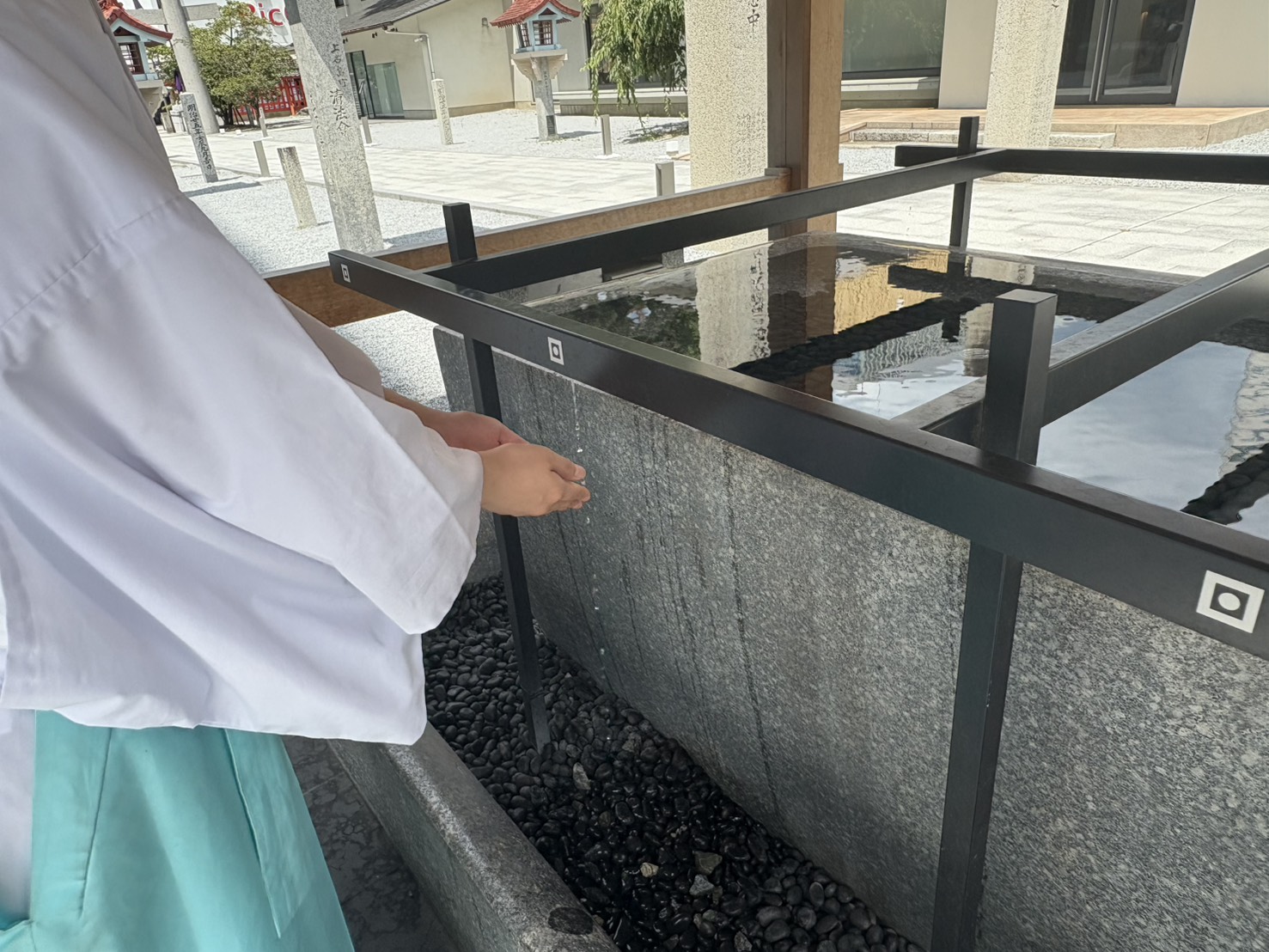
Following the COVID-19 pandemic, more shrines have adopted flowing water for hand purification instead of using ladles.
We will also explain the hand-washing ritual when using running water instead of a ladle.
Wash Both Hands
First, wash both hands. Since a ladle is not used, there is no need to wash each hand alternately.
Cup water in both hands and rinse your mouth
Keep the water in your hands, take a mouthful, and rinse your mouth.
When spitting the water into the drain, cover your mouth with your left hand. This prevents others from seeing your mouth while spitting and is also a polite gesture.
Wash both hands again
Finally, wash both hands once more.
Source: How to Worship | Visiting a Shrine | Official Website of the Association of Shinto Shrines
Proper Conduct Before the Offering Box and the Meaning of Making an Offering
Bow slightly before placing your offering
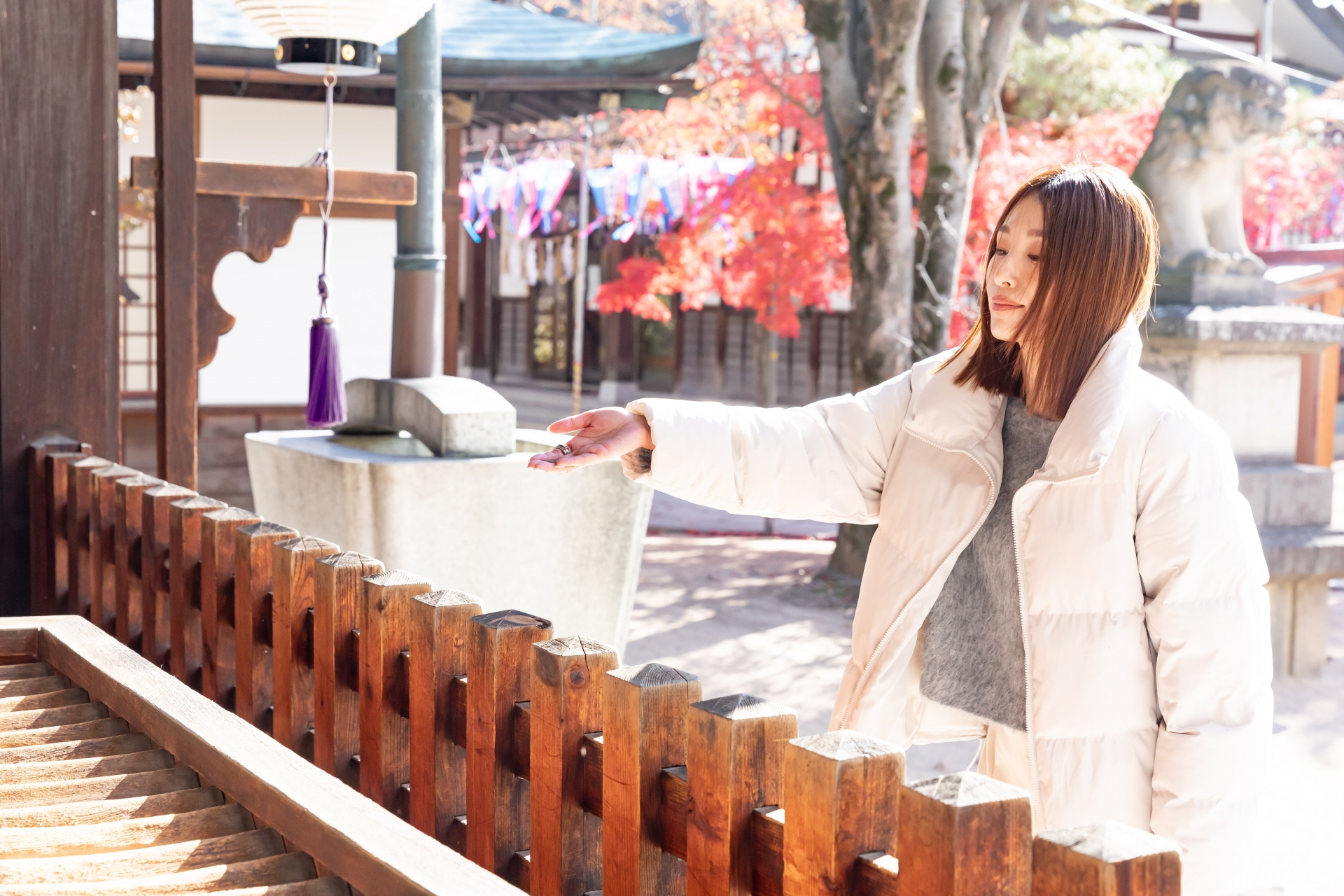
After purifying yourself at the temizuya, proceed to the offering box in front of the worship hall where you will perform your prayers.
At the offering box, bow slightly once more, place your offering money (saisen) into the box, and ring the bell if one is present.
Place the offering quietly into the box
Place your offering quietly into the box. Avoid throwing coins or handling them carelessly.
An act expressing gratitude and repayment to the deity
The character “賽” (sai) in “賽銭” (osaisen) signifies gratitude and repayment of kindness. This refers to the act of giving thanks or offering something in return for the blessings received from the deity.
Additionally, “sen” means money. Therefore, an offering is money presented to the deity with feelings of gratitude and appreciation.
How to Ring the Bell and Its Meaning
Bells are found at Shinto shrines, while temple bells are found at temples
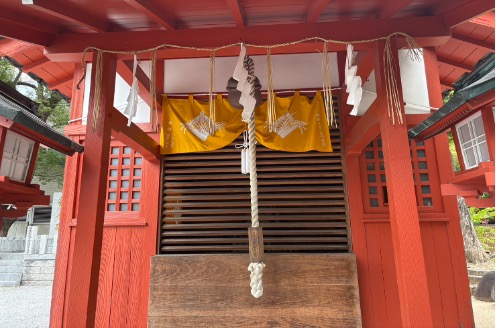
The “suzume” (bell) hung in front of the offering box at shrines is actually not found in temples.
Temples have bells, which are not found in shrines.
The sound of the bell is said to “dispel worldly desires,” while the sound of the wooden fish is said to “set the rhythm for chanting sutras.”
In other words, in Buddhism, “sound is considered a means to calm the mind.” Since bells used to “alert the kami and Buddha” are not employed, bells are not placed in temples.
The bell installed in temples is called a “bon-sho” (Buddhist temple bell) and is unique to Buddhist temples.
The sound of the Buddhist temple bell is said to symbolize calming the mind, letting go of worldly desires, and awakening to the Buddha’s teachings.
In contrast, shrines use bells instead of bells.
In Shinto, the belief is that making sound purifies the space and wards off evil spirits, and bells fulfill this role.
(Reference) Chion-in Temple ‘Joyanokane’ https://www.chion-in.or.jp/special/joya/
The bell has the power to summon the kami and purify the space
Do you know why the “bell” (suzu) is hung in front of the offering box at shrines?
When visiting a shrine, this bell is often the first thing many people notice.
This bell is not merely decorative.
The sound of the bell is believed to have the power to purify the space, and it also serves to notify the deity that a worshipper has arrived before the shrine.
In other words, it carries the meaning of a “sacred sound” connecting the world of the kami and the human world.
The Shinto Shrine Association’s website states:
“This bell is thought to inspire reverence in worshippers with its refreshing tone, purify them, and invoke the divine spirit.”
Source: About the Bells Rung During Worship | Worship | Shinto Shrine Association Official Website
Pull the bell’s cord firmly to ring the bell two or three times.
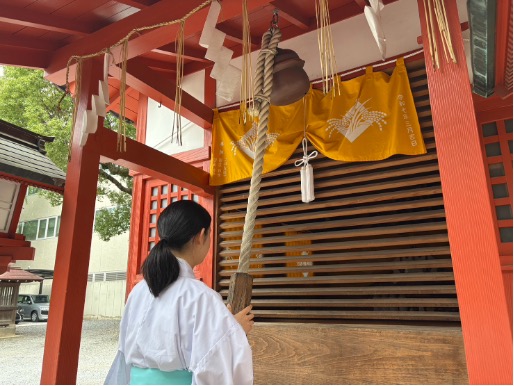
Pull the bell cord firmly and ring the bell two or three times.
If the bell does not ring, try pulling a little harder again.
Do not pull with excessive force or ring it repeatedly too many times.
Avoid pulling the bell with excessive force or ringing it repeatedly.
Doing so may disturb other worshippers or damage the bell or cord. It is considered proper etiquette to ring it with moderate force only the necessary number of times.
The Two Bows, Two Claps, One Bow Etiquette
Bow deeply twice
First, bow deeply twice toward the deity in front of the offering box.

Clap twice
Next, clap twice.
First, bring your hands together in front of your chest and clap twice.
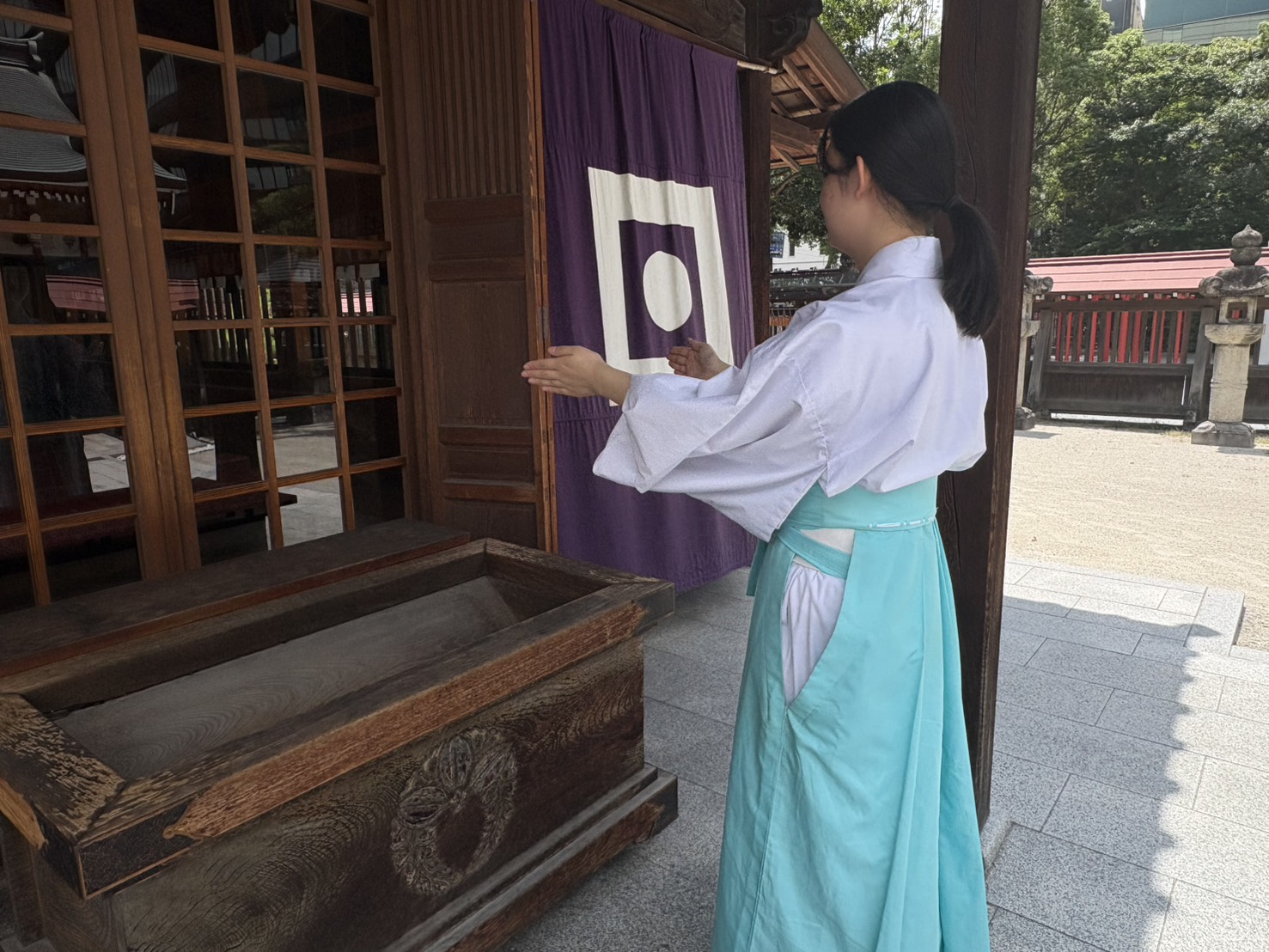
Bow deeply once more
Finally, bow deeply once more.
Exit Etiquette After Worship
After worship, bow slightly toward the shrine building.
After completing your worship, bow slightly toward the worship hall to bid farewell to the deity.
Afterward, avoid the center of the approach path and return toward the torii gate.
When exiting the torii gate, it is appropriate to turn back toward the shrine building and give a light bow.
By carefully performing each of these rituals, you can express your respect for the deity.
Exit quietly.
After your visit, exit quietly.
Since others may be waiting their turn to worship, please promptly vacate the area once you have finished.
The Meaning of Shinto Shrine Visits and Japanese Culture
The Historical Background of Japanese People and Shinto Shrine Visits
Japanese shrine worship dates back to ancient times
Visiting shrines is a tradition that has continued since ancient times. Shinto (the religion of shrines) has no clear origin tied to a specific state or dynasty; it is a folk belief that developed naturally alongside the lives of the Japanese people.
They worshipped natural phenomena (mountains, rivers, rocks, the sea, trees, the sun, etc.) as kami
It was believed that kami resided in all things in nature—mountains, rivers, rocks, the sea, the sun, and more—and these were enshrined as the Yaoyorozu no Kami (Eight Million Kamis). From ancient times, the Japanese sensed the presence of kami in nature, and shrine worship was born and nurtured through expressions of gratitude and prayer.
Even today, many shrines enshrine specific mountains, rocks, and other natural features as sacred objects.
For example, Mount Fuji is still revered today as an object of Mount Fuji worship.

Source: What is Shinto? | Shrines and Shinto | Shinto Headquarters Official WebsiteShinto Headquarters “What is Shinto?”
Basic Knowledge of Shinto Shrines and Shinto
There are no clear records of Shinto’s establishment
Shinto has no specific founder or sacred texts, nor does it possess a codified history. Rather, unique beliefs and rituals developed independently across Japan, eventually integrating into the form we recognize today as shrines. Shinto is called “Japan’s indigenous religion,” a faith deeply rooted in the lives and annual events of the Japanese people.
Source: History of Shinto Shrines (2) – Tokyo Metropolitan Shinto Shrine Association
What is Shinto? | Shrines and Shinto | Official Website of the Association of Shinto Shrines
An indigenous faith practiced in the Japanese archipelago since ancient times
“Ethnic faith” refers to a belief system that has been passed down within a particular ethnic group or region since ancient times and is deeply intertwined with people’s lives.
It is not a religion introduced from outside, but one that naturally arose and developed from the local nature and way of life.
Shinto is precisely this type of ethnic faith.
Its characteristics include the following points:
- Formed organically within the Japanese archipelago
- The belief in the “eight million gods” (Yaoyorozu no Kami), where deities are thought to reside in mountains, rivers, and all things.
- The concept of revering not only shrines but nature itself as sacred
- Influences Japanese values and moral concepts such as “purification,” “courtesy,” and “gratitude”
Source: What is Shinto? | Shrines and Shinto | Official Website of the Association of Shinto Shrines
Standard Attire for Visiting Shinto Shrines
When you feel like visiting a shrine,
you may feel uncertain about what to wear.
Here, we introduce appropriate attire for worship.
Attire for Free Worship (Not Approaching the Shrine Altar)
Informal worship refers to visiting the shrine at your own convenience, not participating in prayers, rituals, or festivals conducted by priests.
It refers to casual, everyday visits to the shrine at your own convenience, where you offer coins and clasp your hands in prayer.
Many people visit to make requests or simply to express their daily gratitude, and the key feature is that no special preparation is needed.
That said, shrines are sacred places where deities are enshrined.
Regarding attire, it is important to be mindful of basic etiquette.
While there are no strict dress codes, avoid revealing clothing.
For casual visits, there are no strict dress codes.
However, aiming for modest attire and thinking of it as “slightly more formal everyday wear” will allow you to visit with peace of mind.
Keep in mind that this is a place to greet the deities, and aim for attire that allows you to visit with a calm and respectful mindset.
Attire for Approaching the Shrine (Prayers, Ceremonies, etc.)
When participating in prayers or rituals, you will approach the shrine altar, so more formal attire is preferred than for free worship.
[For men] Wear a collared shirt, jacket, or suit.
Men should choose proper attire such as collared shirts, jackets, or suits (with a tie).
When wearing a suit, a tie is generally required.
Avoid revealing clothing, flashy designs, or soiled attire.
[For Women] Knee-length skirts or dresses, shirts in subdued colors
For women, we recommend knee-length skirts or dresses, and shirts in subdued colors.
Choose subdued colors like beige or gray, and prioritize a clean appearance.
[Footwear] Avoid sandals
Refrain from wearing unstable footwear like sandals or mules.
While sneakers or loafers are acceptable for attendance, for a more formal impression:
men should wear leather shoes, and women should wear low-heeled pumps.

[Unisex] Opt for subdued colors
For clothing colors, overall subdued tones are safest.
Avoid bright primary colors or flashy patterns, and aim for attire appropriate for the shrine.
Shinto Shrine Etiquette and Visiting Hours
Recommended Visiting Times
Mornings have fewer visitors, allowing for a quieter worship experience.
Generally, it is considered best to visit shrines in the morning.
Early morning hours, in particular, have fewer visitors, allowing you to pray in a quiet environment with a calm mind.
Furthermore, many shrines clean their grounds early in the morning, purifying the space, making morning visits feel especially refreshing.
If you wish to worship slowly in a quiet atmosphere, it is recommended to choose times with fewer people, such as weekdays or early morning.
Note that some shrines may be closed to visitors at night
Some shrines close their gates at night and may not allow visits.
Be sure to check the closing times beforehand before visiting.
Etiquette and Precautions on the Grounds
Some shrines prohibit visits with pets.
Some shrines prohibit bringing pets during visits.
Historically, animals were often considered impure, and it was generally accepted that they should not enter sacred places like shrines.
In recent years, more shrines have begun allowing pets, but policies vary by shrine.
Always check in advance and observe proper etiquette, such as being considerate of others, when visiting.
Source: Can Dogs Enter Shrines? Etiquette for Visiting with Pets and Dog-Friendly Spots | Wanchan Honpo
No Smoking on the Precincts

Smoking is generally prohibited within shrine grounds.
Shrine buildings are often constructed from flammable materials like wood and thatch, making it extremely dangerous to bring open flames.
Furthermore, handling smoke or fire in a sacred place is inappropriate.
Therefore, smoking is generally not permitted within the shrine grounds.
Please remain quiet and avoid loud voices within the grounds.
A shrine is a place to pray to the kami with sincerity.
Please refrain from loud voices, remain quiet, and be mindful not to disturb other visitors who are praying earnestly.
Photography is often prohibited in the main hall and worship hall.
Photography rules within shrine grounds vary by shrine.
As common courtesy, avoid taking photos directly facing the sacred seat (where the deity resides) and refrain from taking photos during religious ceremonies or prayers.
These rules are out of respect for the deities and other worshippers.
Refrain from taking photos in unauthorized areas and follow any posted signs or the shrine’s specific rules.
(Reference)
Mishima Shrine: “How to Worship at a Shrine Explained by the Chief Priest”
Tokyo Metropolitan Government, Bureau of Shinto Shrines: “Proper Worship Etiquette”
Characteristics of Visiting Famous Shinto Shrines
Ise Grand Shrine (Ise Jingū)
Eight Bows and Eight Open Hands (Hachidohai/Hachikaite)
Ise Grand Shrine consists of the Inner Shrine (Kōtaijingu) and the Outer Shrine (Toyouke Daijingu).
Both have sacred enclosures (tamagaki) around their main shrines, preventing general visitors from approaching the inner sanctum. Ise Jingu features a special ritual called “Eight Bows and Eight Open Hands (Hachidohai/Hachikaite),” performed by priests conducting ceremonies. General visitors perform the standard two bows, two claps, and one bow.
The number “eight” has historically represented “all directions” and “the eight million kami,” signifying boundless expansion.
Therefore, the Eight Bows and Eight Open Hands has been regarded as a symbol of paying full respect to the kami of heaven, earth, and all directions.
Its origins are unclear, but by the medieval period, it had taken shape as a ritual practice at the Grand Shrine. By the Edo period, it became widely known that “at Ise Grand Shrine, the eight bows are performed.”
Even today, it remains a solemn ritual unique to Ise Grand Shrine, performed only during major festivals and other special sacred ceremonies.
Source: Worship and Prayer (5) – Tokyo Metropolitan Shinto Shrine Agency
Izumo Grand Shrine (Izumo-ōyashiro)
Two Bows, Four Claps, One Bow
Izumo Grand Shrine is known as a shrine for matchmaking, enshrining the deity Ōkuninushi-no-Ōkami, and is famous for the large sacred rope (shimenawa) hung over its torii gate.
Unlike the common practice of two bows, two claps, and one bow, formal worship here follows the ritual of two bows, four claps, and one bow.
However, during the regular annual festival (the Imperial Festival on May 14th), eight claps are performed, while on ordinary days, the deity is praised with four claps, half that number.
This practice was already established during the Edo period and has been carefully preserved to the present day.
At any shrine, if the method of worship differs, it is important to follow that shrine’s unique etiquette.
Source: How should one worship at Izumo Taisha? | Frequently Asked Questions | Izumo Taisha
How to Explain Shrine Visiting Etiquette in English
Basic English Expressions Often Used for Shrine Visits
Shrine = “Shinto shrine”
A shrine is called a “Shinto shrine” in English. It is used after the name, like “Meiji Jingu (明治神宮) a Shinto shrine”.
Shrine alone can also refer to a place enshrining the remains, relics, or statues of saints, or to a sacred site, pilgrimage site, or spiritual
place: a historically or imaginatively revered location.
“To worship” = “worship” or “visit a shrine”
Visiting a shrine is expressed as “Visit a shrine” or “Worship at a shrine”.
“Temizu” = “Purification”
“Temizu” is expressed as “Purification.” Explaining it as a “Purification ritual” makes it easier to understand.
“賽銭” = “Offering”
The act of placing money in the offering box is explained as “Make an offering.” “Offering” is a term frequently used in shrine visits.
“拍手” = “Clap”
The clapping performed during shrine visits is described as “Clap (to strike hands together).” Explain it as “Clap your hands twice (strike your hands together twice).”
Specific Methods for Visiting a Shrine and English Expressions
The center of the torii gate is the path for the kami, so it is proper etiquette to walk on the sides.
The center of the torii gate is called the “seichu” (正中), a sacred path for the kami. Therefore, it is polite for visitors to avoid the center and walk along the sides.
In English, explain it as follows:
“Please avoid walking in the center of the Torii gate, because it is considered a sacred path for the kami. Walk along either side.”
The ritual of hand-washing involves purifying both hands and the mouth
The hand-washing ritual involves first holding the ladle in your right hand to purify your left hand. Next, switch the ladle to your left hand to purify your right hand. After that, take water in your left hand to rinse your mouth. Finally, purify the ladle itself and return it to its place.
The English example is as follows:
First, hold the ladle with your right hand and cleanse your left hand. Switch the ladle to your left hand and cleanse your right hand. Then take water into your left hand to rinse your mouth. Finally, cleanse the ladle itself and put it back.
It is customary to quietly place offerings into the donation box and ring the bell two or three times.
Place your offering quietly into the box and ring the bell above it two or three times.
In English, you would say:
“Please place your offering quietly into the offertory box. Then ring the bell two or three times.”
The formal worship etiquette is two bows, two claps, and one bow.
The formal worship procedure is: first, bow deeply twice; then clap your hands twice at chest level. After that, pray quietly, and finally bow deeply once more.
A specific example in English is as follows:
“First, bow deeply twice. Then clap your hands twice at chest level. Pray silently, and finally bow deeply once more.”
After worship, it is proper etiquette to bow once toward the shrine building before leaving.
After worship, lightly bow toward the shrine building and exit the grounds. It is also desirable to turn around and give a light bow when passing through the torii gate.
In English, this is explained as follows:
“After praying, lightly bow toward the main shrine building. When exiting through the Torii, briefly turn back and bow lightly again.”
Points to note when explaining shrine worship to foreigners
Explain that Shinto is Japan’s indigenous religion
When explaining to foreigners, briefly convey that Shinto is Japan’s indigenous religion and a culture that reveres nature and ancestors.
Specific examples in English are as follows:
“Shinto is Japan’s indigenous religion, based on respect for nature and ancestors.”
Explaining the meaning and reasons behind worship practices deepens understanding
Rather than merely teaching the rituals, conveying their meaning and purpose encourages deeper understanding.
An example in English is as follows:
“We clap our hands to let the kami know of our presence and purify the area.”
Explain that hats and sunglasses should be removed during worship, and that worship should be conducted quietly.
As part of worship etiquette, it is necessary to clearly convey that hats and sunglasses should be removed and worship conducted quietly.
The English example is as follows:
“Please remove your hats or sunglasses while worshiping, and remain quiet within the shrine grounds.”