- 1What is a Shinto shrine?
- 2Thorough Explanation of Shinto Shrine Basics
- 3Basic Structure of Shrine Grounds and the Role of Each Facility
- 4Proper Worship Methods and Etiquette
- 5Useful Shinto Shrine Trivia
What is a Shinto shrine?
Basic Definition
A place to worship Japan’s indigenous deities
Throughout daily life, the Japanese have sensed a great, unseen power. This power was found in various aspects of nature—rocks, trees, mountains, seas, fire, water—and it was believed that Kami dwelled within all things, leading to their worship.
A Shinto shrine is a place where such deities are still reverently enshrined and honored today.
(Reference) Shinto Shrine Association Official Website
‘About Shrines’
A Shinto shrine refers not just to the building, but to the entire “place”
While shrines have various facilities within their precincts, such as the main hall and shrine office, the term “shrine” does not refer only to the main hall where the deity resides. It refers to the entire place, including the precincts.
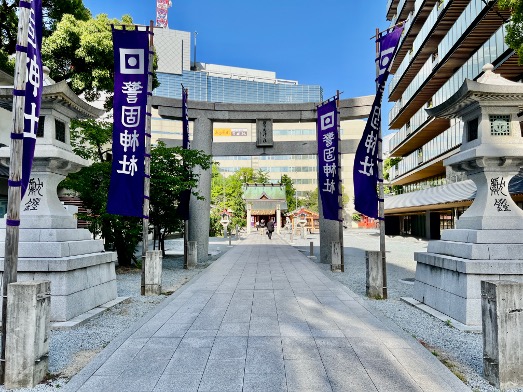
Once you pass through the torii gate and enter the grounds, you are already in a sacred space where the Kami reside.
The Role of Shinto Shrines
A “Sacred Facility” Connecting Deities and Humans
Originally, shrines performed prayers with strong public significance, such as for national security and stable weather.
This served to connect the deity with the people, acting as a mediator between them.
When praying to the kami in this way, offerings such as vegetables, fruits, or dances were presented, followed by making requests to the kami. This series of rituals is called “sacrificial rites (sai-shi)” and has been performed at shrines since ancient times.
Community Building Through Festivals
In local communities, “festivals” are not merely shrine events; they also serve as a community-building function, connecting people.
Residents living within the shrine’s designated area are called parishioners. During festivals, the shrine and parishioners collaborate to create the festival.
Through this process, bonds between people are formed, fostering the local community.
(Reference) Kokugakuin University Media: ‘Shrines: Not Merely Power Spots, but Regional Identities’
Thorough Explanation of Shinto Shrine Basics
What is Shinto, the Religion of Shrines?
Japan’s Indigenous Religion
Shinto is a religion found only in Japan worldwide.
As the culmination of ideas systematized from the lives of the Japanese people, Shinto is the only ethnic religion unique to the Japanese.
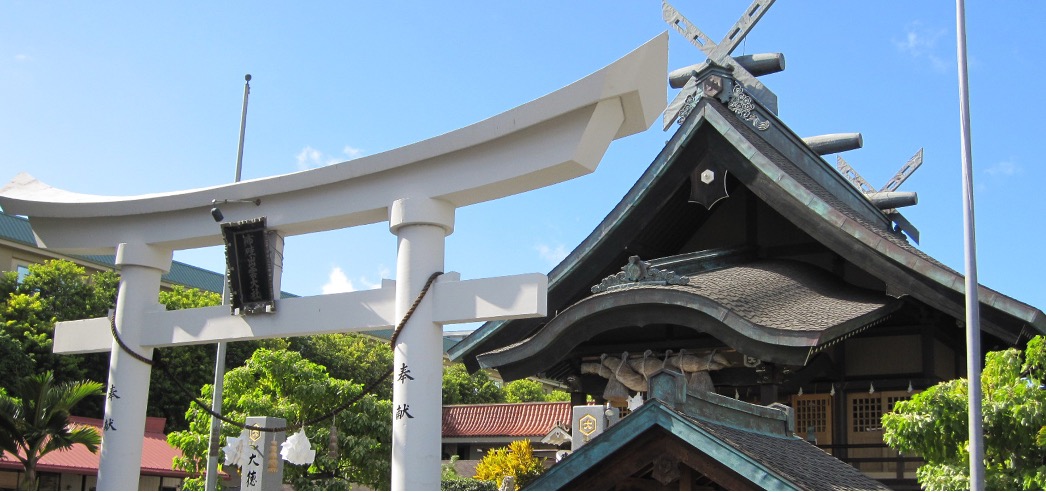
While shrines exist outside Japan, such as in Hawaii and São Paulo, Brazil, most were established by Japanese people who crossed the sea around the time of the Pacific War. They built these shrines as spiritual anchors, remembering their homeland, Japan.
(Reference) ‘Hawaii Izumo Taisha’
The “Yaoyorozu no Kami” (Eight Million Gods) who honor nature and ancestors
“Yaoyorozu” does not mean “eight million,” but rather signifies “countless.”
Throughout their long history, the Japanese people have sensed and discovered the power of the Kami in all things of nature. This includes everything from the sea and rivers to rocks, trees, water, fire, and beyond.
Therefore, in Shinto, the gods are called the “Yaoyorozu no Kami” (Eight Million Gods), signifying that there are countless deities.
(Reference) Tottori Prefecture Shinto Youth Association, “Various Gods”
No scriptures or founder
Shinto lacks the sacred texts and founding figures found in religions like Buddhism or Christianity.
For example, Buddhism originated when Buddha, born around the 5th century BCE in northern India, attained enlightenment and then traveled around teaching his disciples. The words of Buddha, passed down and compiled by his disciples, became the scriptures.
Similarly, in Christianity, Jesus Christ, born in the Jewish region around the 1st century CE, is the founder, and the Bible exists as scripture.
Shinto, however, emerged and took shape organically over time within the Japanese archipelago. Consequently, it has neither a founder nor sacred scriptures, establishing itself as a religion aligned with the lifestyles and thought patterns of the Japanese people.
(Reference) Hokkaido Shinto Shrine Association ‘About the Shinto Shrine Association’
The Origins of Shrines: When and How Did They Emerge?
Initially, deities were invited and enshrined in trees and rocks.
When exactly did shrines first appear? In truth, their origins remain unclear.
Because shrines naturally formed across the Japanese archipelago, pinpointing their exact origin is impossible. However, the prevailing theory suggests prototypes existed from the Yayoi period, when rice farming became widespread, and even earlier, during the Jomon period.
During this period, deities were not enshrined in structures like those seen today. Instead, sacred trees, large rocks, or mountains were considered places where deities descended. These locations were revered as sacred sites where the deities were worshipped.
(Reference) Tokyo Shinto Shrine Association, ‘History of Shinto Shrines’

From around the 6th to 7th centuries, Shinto shrine buildings began to be constructed in their present form.
From around the 6th to 7th centuries, influenced by Buddhism, shrine buildings gradually began to be constructed.
By the 7th century, entering the Nara period, the Ritsuryō system was established. To control the populace, the imperial court sought to organize shrines. Gradually, shrines—places where people gathered—began to feature more elaborate structures.
(Reference) Miyajidake Shrine Official Website
‘History of the Shrine’
Types of Shinto Shrines Across Japan
Inari Shrines
Inari shrines are revered as guardian deities of daily life, overseeing clothing, food,and shelter.
There are said to be 30,000 shrines nationwide, with the head shrine being FushimiInari Taisha in Kyoto City.
(Reference) Yutoku Inari Shrine Official Website ‘About Yutoku Inari Shrine’
Ichinomiya
Ichinomiya refers to the shrine designated as the highest-ranked shrine within each “country” during the Ritsuryō system era.
While modern Japan has 47 prefectures, there were 68 provinces during that era, each with its own Ichinomiya. However, over time, these changed, and in some cases, multiple shrines came to hold the title.
(Reference) Sakurai Koyasu Shrine ‘What is Ichinomiya?’
Hachimangu
Originating from Usa Jingu in Oita Prefecture, numerous Hachimangu shrines exist nationwide.
They enshrine Emperor Ojin and Empress Jingū, and some are affectionately known as Hachiman Shrine or Hachiman-sama.
Tenmangū
These shrines enshrine Sugawara no Michizane as their deity, and shrines named Tenjin-sama or Tenmangu can be found nationwide.
Due to his exceptional wisdom during his lifetime, Michizane is now revered as the god of learning.
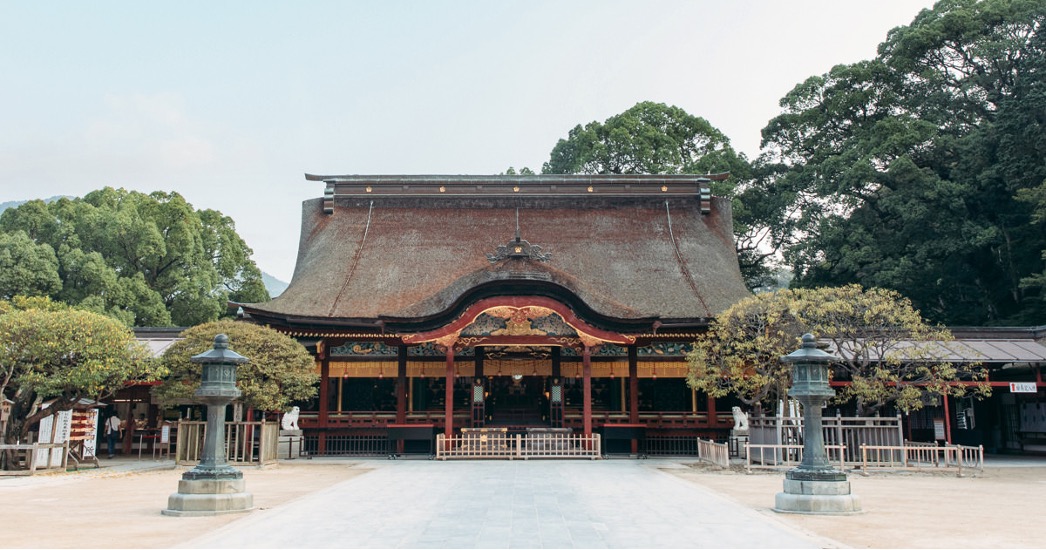
Other Types
There are also many other types of shrines, such as Sumiyoshi Shrines, Suwa Shrines, and those classified as “Sōsha” (central shrines).
Basic Structure of Shrine Grounds and the Role of Each Facility
Role and Types of Torii Gates

The boundary between the secular world and the sacred domain
Torii gates are erected at the boundary separating the inside and outside of a shrine, with the inner side considered the sacred place where the deity resides.
Additionally, at shrines without a main hall that enshrine natural objects like mountains as the divine object, a torii gate may sometimes be erected in front of them.
The Passage Theory and the Perch Theory
Regarding the origin of torii gates, there are theories such as one where the Kami made a rooster crow when Amaterasu Omikami hid in the heavenly rock cave, and the tree where the rooster perched became the origin of the torii, or another theory where the word “passing through” became the etymological origin.
(Reference) Shinto Shrine Association ‘About Torii’
The Role and Etiquette of the Temizuya
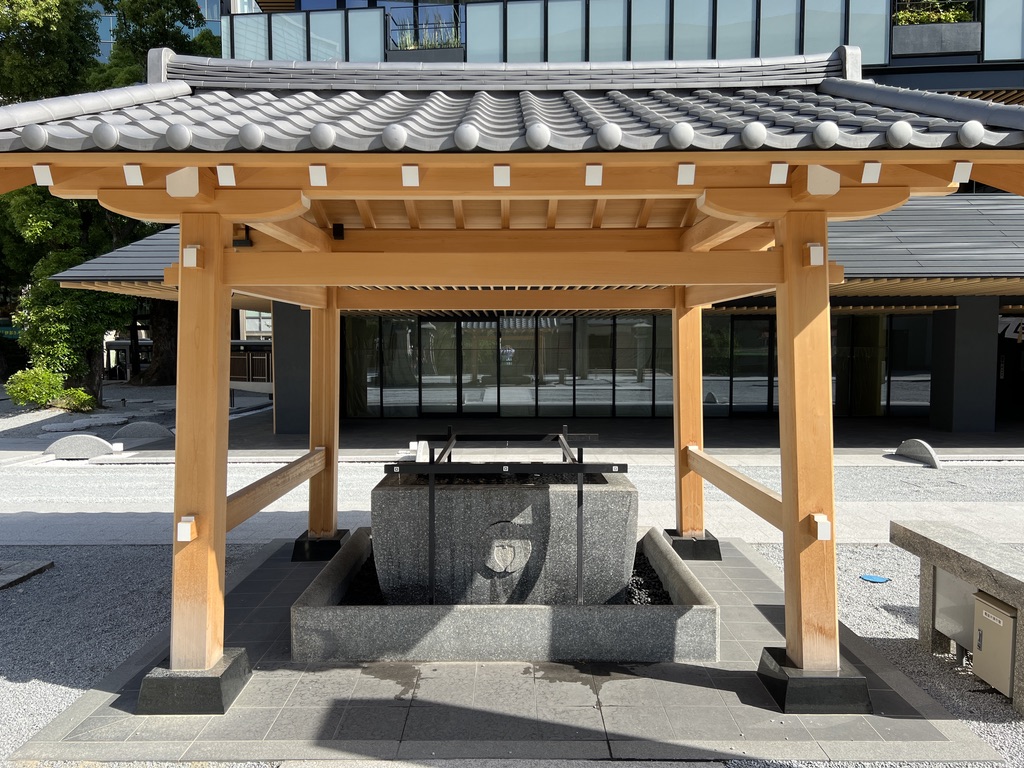
A place to purify body and mind by washing hands and mouth
The temizuya is a place to purify your hands and mouth before worship or participating in shrine rituals.
They are often located along the approach path; please purify yourself here before worship.
As hand towels are often not provided, it is advisable to take out a handkerchief beforehand to ensure you can dry your hands smoothly after the ritual.
The proper method for purification is to cleanse in this order: left hand, right hand, mouth, left hand.
The correct procedure for purification is as follows:
- First, hold the ladle in your right hand, scoop up a generous amount of water, and purify your left hand.
- Next, switch the ladle to your left hand and purify your right hand.
- Take the ladle in your right hand again, pour a small amount of water into your left hand, and lightly rinse your mouth. Be careful not to put your mouth directly on the ladle.
- Wash the handle of the ladle with the remaining water and return it to its original position.
However, some shrines do not have ladles; instead, they have water basins where water flows automatically.
In such cases, there is also a proper method.
- First, purify both hands.
- then pour a small amount of water into your left hand and lightly rinse your mouth.
- Finally, purify both hands once more.
The Main Hall (Honden) and Worship Hall (Haiden)
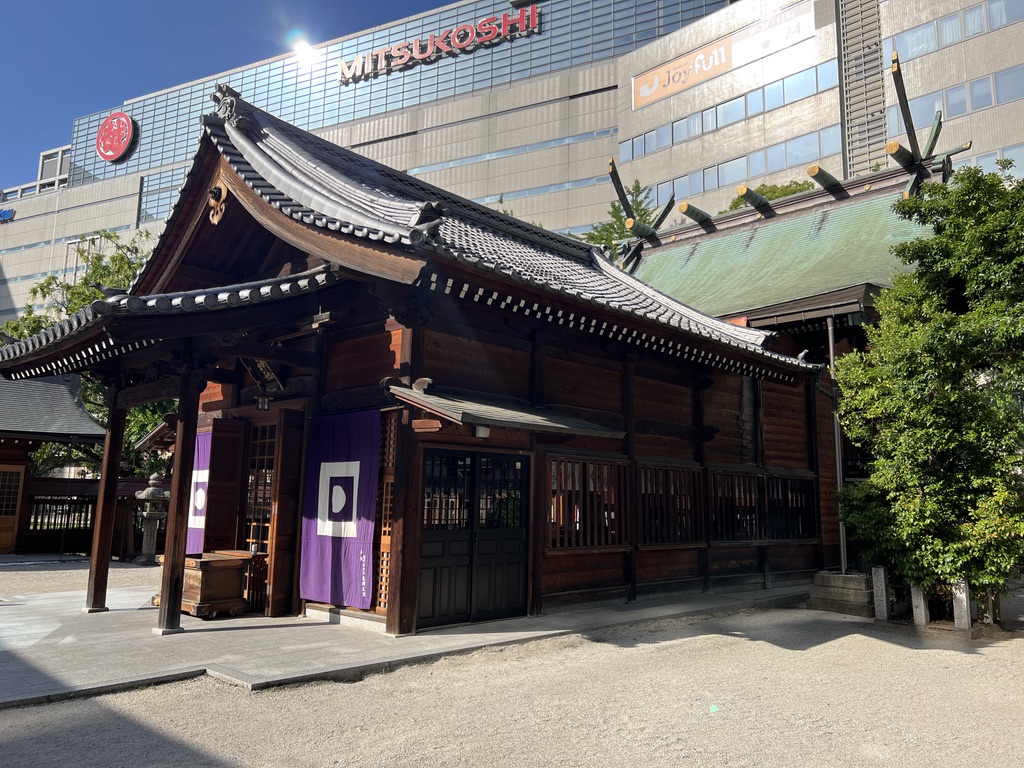
The place where the deity resides
The Main Hall is where the deity resides and is the most important place in the shrine.
It is often set apart from the worship hall. Typically, the place where we worship is the worship hall, while the main hall may be located further back.
Where worship, prayers, and Shinto rites are performed
Located in front of the main shrine, the worship hall, as its name suggests, is the place for worship and prayer.
Located closer to the entrance than the main shrine, it is the most visible building to visitors.
Other Main Facilities
Subordinate Shrines

In addition to the main hall, smaller shrines may also be enshrined within the shrine grounds.
These smaller shrines are called branch shrines or subsidiary shrines, and they enshrine deities associated with the history or significance of the main shrine.
Shamusho
The shrine office is where priests and shrine maidens perform administrative tasks. Compared to a typical company office, it is designated as the shrine office for the shrine.
At some shrines, the shrine office also serves as the “offering hall” where amulets and other items are distributed.
Ema Hall
The Ema Hall is a building within the shrine grounds dedicated to the offering of ema (votive plaques).
Worshippers write their wishes or feelings of gratitude on an ema and dedicate it to the shrine as an offering to the deity.
Ema are not limited to the palm-sized ones seen today; large ema measuring several meters in size are also sometimes offered.
(Reference) Shinto Shrine Association ‘About the Precincts’
Proper Worship Methods and Etiquette
Points to Keep in Mind When Entering the Precincts
When passing through the torii gate, bow once first.
Passing through the torii gate means entering a sacred space where the Kami reside, distinct from the outside world. Therefore, it is considered polite to bow before passing through, with the same respect as when visiting the home of someone senior to you.
Visit with a Calm Mind
Since we live our daily lives receiving blessings from the Kami, it is important to worship with respect.
Therefore, to show this respect, when visiting the shrine, avoid being noisy and instead calm your mind and worship with care.
Proper Worship Etiquette
“Two Bows, Two Claps, One Bow”
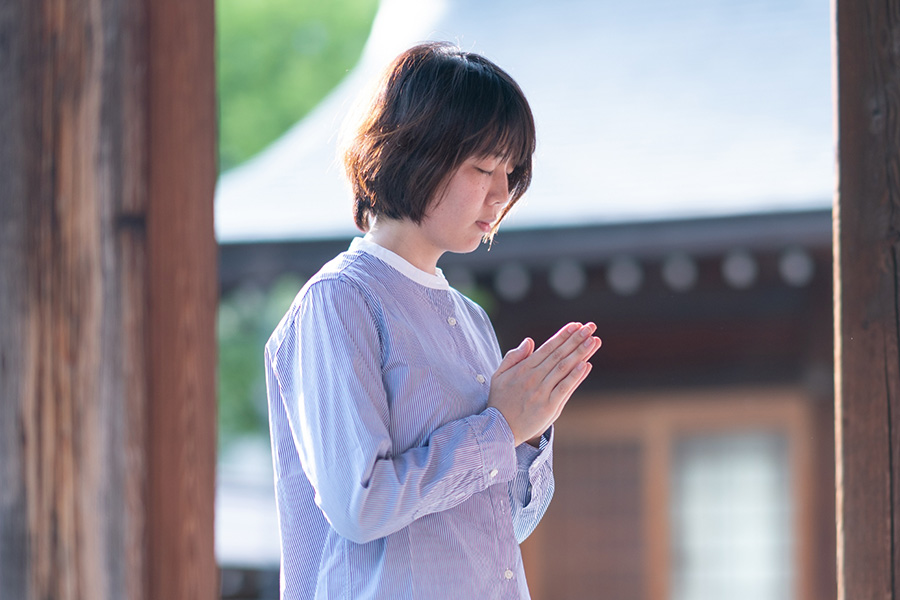
The ritual of worship has evolved over a long history, and today the basic practice is “two bows, two claps, one bow.”
- Bow deeply twice. (Two bows)
- Clap your hands twice. (Two claps)
- Finally, bow deeply once more. (One bow)
(Reference) Shinto Shrine Association ‘Worship Methods’
Note: Some shrines may have different practices
While the “two bows, two claps, one bow” ritual is practiced at shrines nationwide, some shrines have unique worship methods.
For example, Izumo Ooyashiro in Shimane Prefecture uses the “two bows, four claps, one bow” method, while Ise Jingu in Mie Prefecture still practices the ancient traditional method of “eight bows and eight claps” (hachido hai, yahirate).
However, these are merely traditional methods of worship. For us ordinary people, what matters most is how sincerely we worship, rather than being overly concerned with the form of the ritual.
Therefore, even if you worship using the standard “two bows, two claps, one bow” method, as long as you worship with sincerity, it is not considered disrespectful.
(Reference) Izumo Ooyashiro Official Website:
‘How Should One Worship at Izumo Ooyashiro?’
Tokyo Shrine Agency
‘Visiting Shrines and Prayer’
Points to Keep in Mind at the Shrine Office and Offering Hall
Treat amulets with care
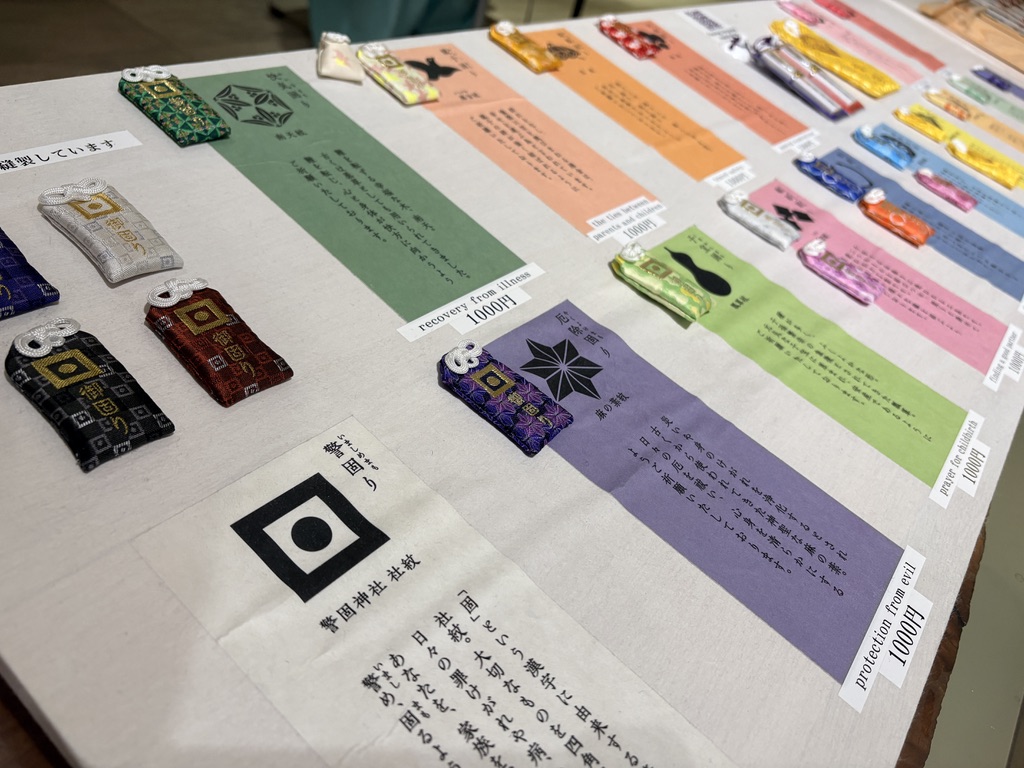
Omamori talismans contain the power of the deity enshrined at that shrine. In other words, they are like the deity’s avatar.
After receiving an amulet, treat it with care and respect, not carelessly.
Goshuin stamps are proof of worship that visitors can receive
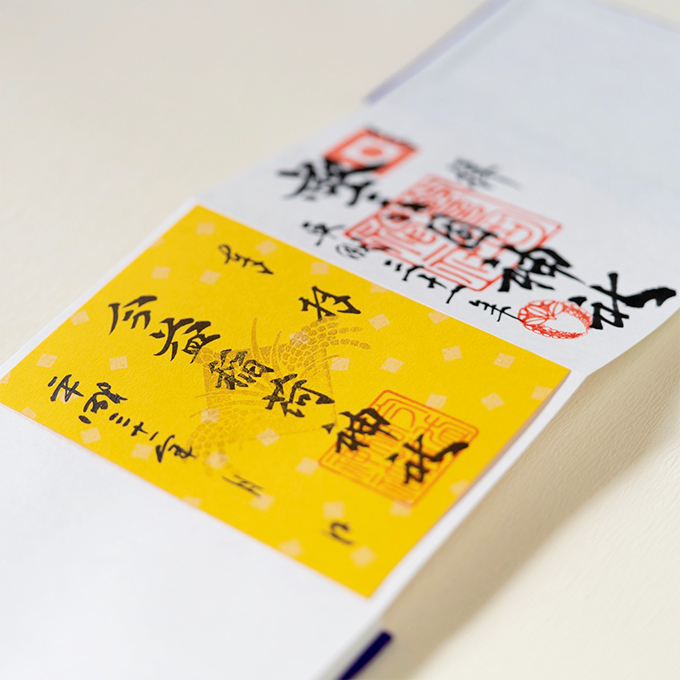
Goshuin stamps evolved from seals given as proof of submitting sutra copies and are now granted as “proof of worship.”
Receive it as a memento of your visit and a reminder of your connection with the deity. Be mindful not to treat it as a stamp rally to collect.
Prayer services are rituals where priests convey your wishes to the deities.
Prayer ceremonies involve ascending to the shrine hall where a priest recites a norito (prayer) to convey your wishes to the deity.
The priest acts as a “mediator between the deity and the worshipper,” incorporating the worshipper’s request into the norito and offering it to the deity.
Compared to simply placing an offering and clasping hands in front of the shrine, prayer services represent a more formal method of worship.
Useful Shinto Shrine Trivia
The Crucial Difference Between Temples and Shrines
Objects of Worship (Buddhist Statues and Divine Objects)
Temples enshrine Buddhist statues, such as Buddha, the founder of Buddhism, and bodhisattvas. These statues are often publicly displayed, though some temples only open them to the public on specific days as part of a special viewing event.
In contrast, shrines enshrine sacred objects (goshintai) believed to house deities. Based on the belief that sacred things should not be seen directly, these are never publicly displayed.
The sacred objects vary by shrine, including mirrors, swords, rocks, mountains, and other forms.
Buildings (Sanmon Gate vs. Torii Gate)
Both temples and shrines have structures that serve to separate the sacred precincts from the outside world.
At temples, this is called the “sanmon” (mountain gate), signifying that the space beyond is sacred.
For shrines, the torii gate serves this role. Unlike a mountain gate, a torii is not a building but has a gate-like shape. They come in various types, including wooden, stone, and metal constructions.
Worship Methods (Gassho vs. Two Bows, Two Claps, One Bow)
At temples, the common worship practice is to clasp hands and bow once, though this varies by sect.
- Place your palms together and bow once.
- Quietly bring your hands together and pray to the principal image with gratitude for daily blessings. (Do not clap your hands.)
- Perform gassho and one bow.
Additionally, if offering incense or if a waniguchi (a bell-like Buddhist instrument) is present, perform this after “1. Gassho and one bow”.
At shrines, the practice is two bows, two claps, and one bow.
The absence of tools like incense or a waniguchi is also a characteristic feature of shrine visits.
Major events held at shrines
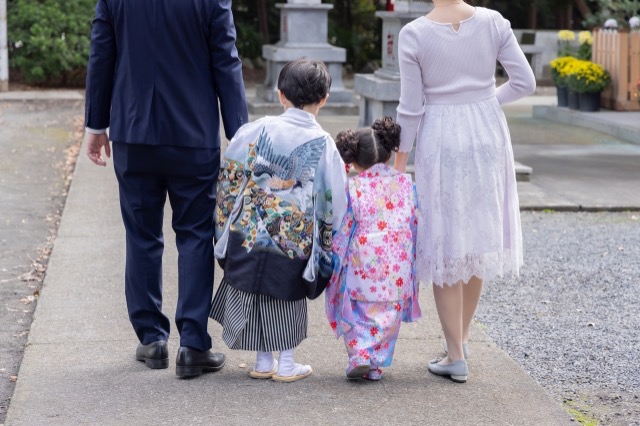
First shrine visit for newborns, Shichi-Go-San,厄除け (yakuyoke: exorcism to ward off misfortune), etc.
At shrines, you can participate in “prayer services” conducted with a Shinto priest. The content varies widely, and there are prayer services tailored to individual wishes.
Some shrines also offer special prayers aligned with the specific blessings associated with their deity.
Annual Grand Festivals, Niiname-sai (New Rice Offering Festival), etc.
Throughout the year, shrines hold sacred ceremonies called “matsuri” (festivals).
These festivals are rituals to please the deities. Among them, major festivals like the Annual Grand Festival and the Niiname-sai Harvest Festival, along with many other festivals, are held at shrines nationwide.
The unique character of each festival often reflects the specific methods used to honor the deity. Offerings may include rice or vegetables, or dances may be performed. Sometimes, the deity is carried in a mikoshi portable shrine as it is paraded through the streets with the people.

What is the meaning of offering money?
Originally, offerings were made with harvested crops like rice
Saisen did not start with simply throwing money into the shrine; it is said to have originated from offering newly harvested crops, fish, and other produce to the Kami as a way to express gratitude for the harvest.
By the late 8th century, records show newly minted coins being offered to the Kami. Gradually, the practice spread throughout society, with money becoming an offering alongside harvest goods.
Saisen = Expressing Gratitude to the Kami
Originally, offering money meant presenting harvests and expressing gratitude for nature’s blessings.
Therefore, even if the act of offering money has changed to simply throwing coins into the box, its fundamental meaning remains unchanged: it is an expression of gratitude to the Kami.
(Reference) Kokugakuin University Media: “Why Do We Offer Money When Praying at Shrines?”
Do shrines have areas of expertise?
Each shrine and deity has its own characteristics and offers different blessings.
Japan has a diverse array of shrines, each with its own history, characteristics, and specific blessings.
For example, Dazaifu Tenmangu enshrines Sugawara no Michizane and is particularly renowned for granting academic success and exam passing. Similarly, Inari shrines, such as Fushimi Inari Taisha in Kyoto, are famous for bestowing blessings of abundant harvests and prosperous business.
Some shrines are also dedicated to severing ties
Among the diverse blessings offered by shrines, one distinctive feature is the “breaking of ties.” This blessing involves severing all negative connections to pave the way for positive ones, with shrines like Yasui Konpira-gu in Kyoto being famous for this.
This benefit of “breaking ties” also originated from the historical connection of Yasui Konpiragu’s founding legend to severing relationships.
(Reference) Yasui Konpira Shrine ‘About Yasui Konpira Shrine’
Matchmaking Shrines Exist Nationwide
Shinto shrines dedicated to matchmaking are found throughout Japan, with Izumo Taisha being one of the most famous.
Its enshrined deity is Ōkuninushi-no-Ōkami. This deity is revered for granting blessings that connect not only romantic bonds between men and women but also all kinds of relationships that lead to mutual prosperity. Shrines enshrining Ōkuninushi-no-Ōkami as their principal deity can be found throughout Japan.
Additionally, there are numerous shrines nationwide known for matchmaking blessings, such as Tokyo Daijingu (Tokyo) and Koibiki Shrine (Fukuoka Prefecture), even if they do not specifically enshrine Ōkuninushi no Ōkami.
(Reference) Ōinari Shrine ‘Types and Differences of Shrines’
Izumo Taisha ‘Izumo Taisha and Ōkuninushi no Ōkami’